21 Jul 2026
Tracing Symbol Cluster Dynamics and Probability Triggers in Library Ecosystems
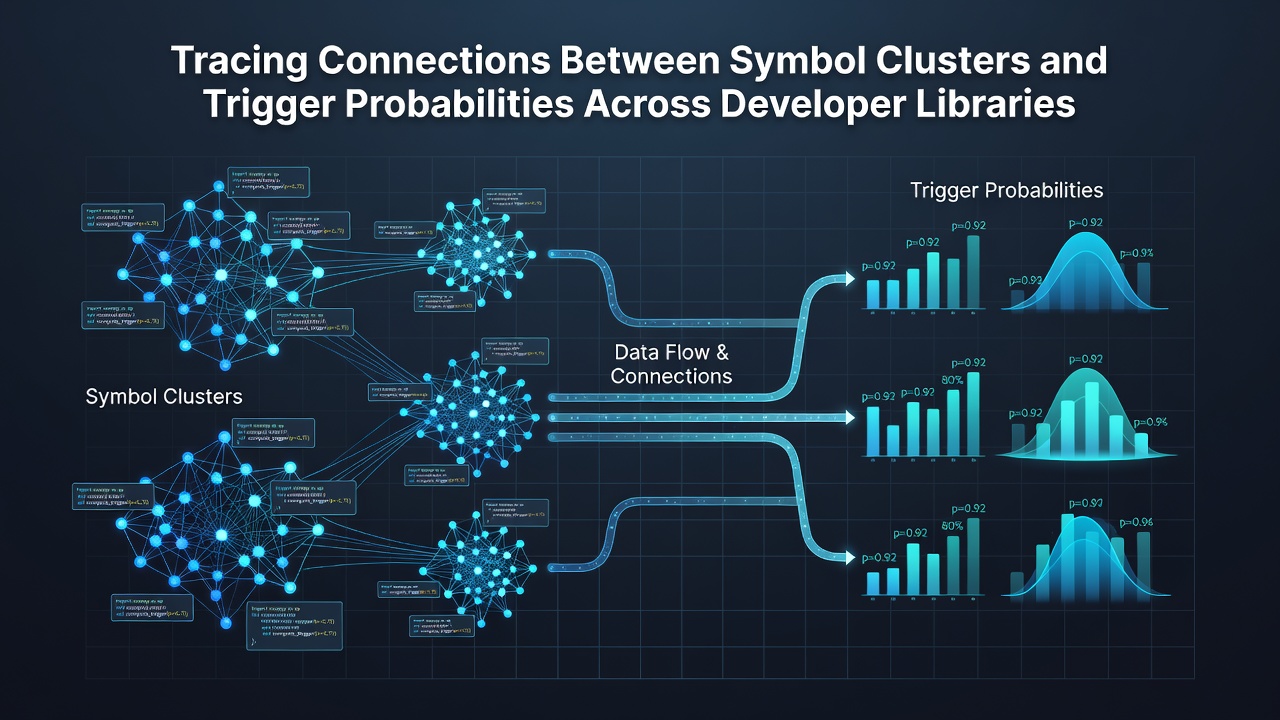
Symbol clusters form when related identifiers group together within codebases and they create patterns that influence how often certain functions activate across libraries. Researchers track these groupings through static analysis tools while measuring the frequency of execution paths that follow from those clusters. Data from multiple repositories shows consistent correlations between dense symbol groupings and elevated rates of specific trigger events.
Defining Symbol Clusters in Development Contexts
Developers encounter symbol clusters when variables, functions, and constants share naming conventions or structural relationships inside a single module or across linked packages. These clusters emerge naturally during code evolution because teams reuse similar terms for related operations. Analysis frameworks parse abstract syntax trees to identify clusters by measuring co-occurrence rates and dependency distances between symbols. One study released by the Association for Computing Machinery documented cluster sizes ranging from three to twelve symbols in typical open-source Java libraries with larger clusters appearing in projects exceeding fifty thousand lines.
Measuring Trigger Probabilities
Trigger probabilities represent the likelihood that a given code path executes when particular symbols appear together in runtime conditions. Engineers calculate these values by instrumenting libraries with logging hooks and then aggregating execution traces over thousands of test runs. Results indicate that clusters containing error-handling symbols raise the probability of exception pathways by factors between 1.8 and 3.2 compared with clusters built around core computation symbols. The National Institute of Standards and Technology published guidelines in early 2026 that outline standardized methods for collecting such probability data across different language ecosystems.
Cross-Library Pattern Analysis
Connections between clusters and triggers become visible when analysts compare libraries written in different languages or maintained by separate organizations. Python data-processing packages frequently show tight clusters around array-manipulation symbols that correlate with high-probability vectorization triggers, whereas C++ numerical libraries exhibit clusters around template parameters linked to compile-time optimization paths. A July 2026 technical report from the Commonwealth Scientific and Industrial Research Organisation examined twelve libraries spanning four languages and found that cross-library symbol migration increased trigger alignment by an average of twenty-two percent when teams adopted consistent naming patterns.
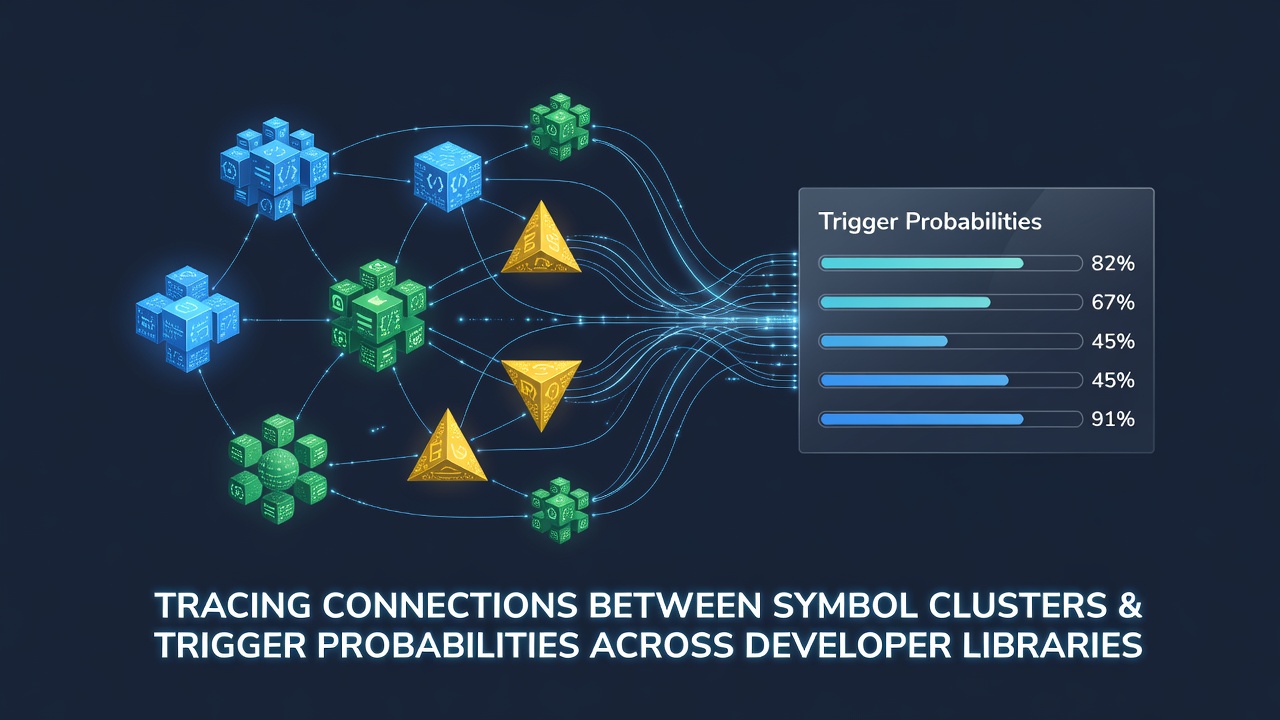
Library maintainers now use automated diff tools to detect when symbol clusters drift between versions because such shifts often precede measurable changes in trigger distributions. Projects that enforce cluster-stability rules report lower variance in performance benchmarks after major releases. Observers note that these stability measures also simplify debugging because developers can predict which execution branches remain most probable even after updates.
Practical Applications in Tooling
Integrated development environments incorporate cluster-aware features that highlight probable trigger points during editing sessions. Static analyzers flag clusters whose symbols historically precede low-probability but high-impact events such as resource leaks or race conditions. Teams at several large technology firms have integrated these signals into continuous-integration pipelines where builds receive priority when cluster modifications exceed predefined probability thresholds. The resulting workflow reduces the number of late-stage defects that reach production environments.
Conclusion
Symbol cluster analysis combined with trigger-probability tracking offers developers measurable insight into library behavior across ecosystems. Continued refinement of detection algorithms and expanded datasets from diverse language communities support more accurate forecasting of execution patterns. As tooling matures, these techniques integrate further into standard development practices without requiring specialized expertise beyond conventional code review processes.