9 Jun 2026
Layered Multiplier Systems Driving Progressive Jackpot Payouts in Studio Offerings
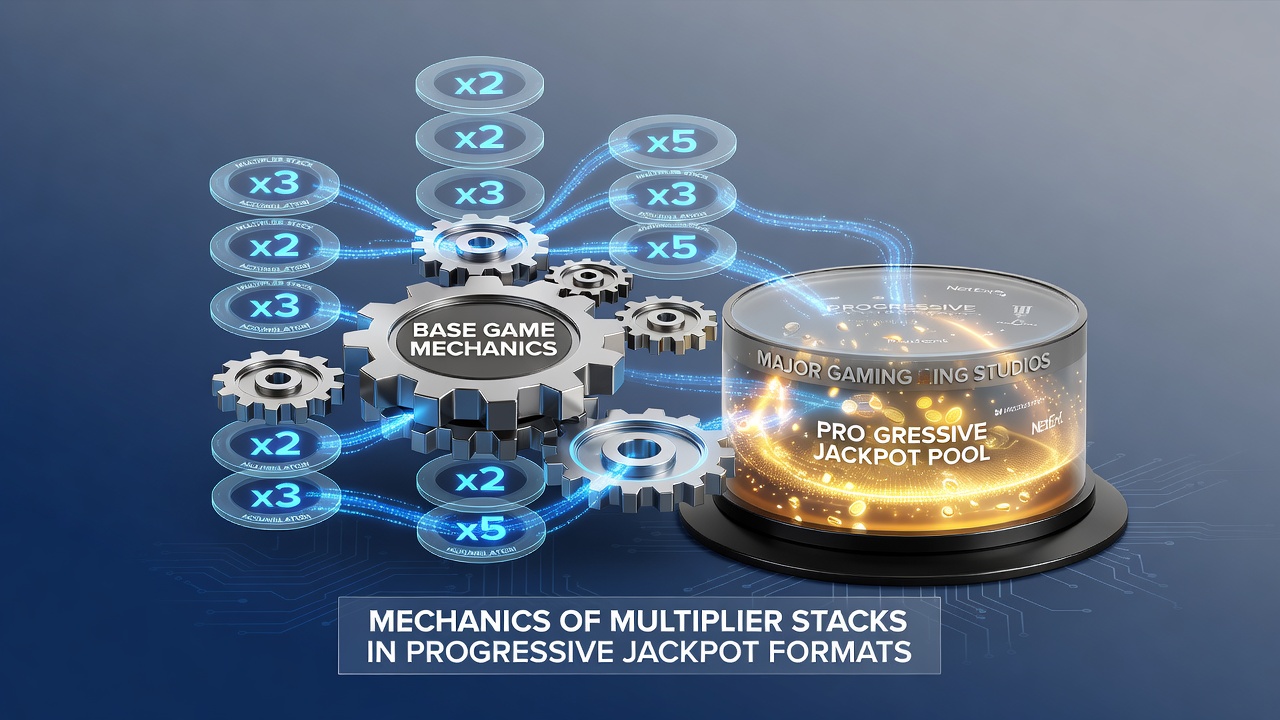
Progressive jackpot formats accumulate contributions from player wagers into a shared prize pool that grows continuously until triggered, and major gaming studios integrate multiplier stacks to scale those payouts through sequential additions during base play and bonus sequences. Data from industry reports shows that studios such as Microgaming and NetEnt apply layered multipliers where each qualifying symbol or event adds a value that compounds with prior layers rather than replacing them, creating exponential growth in the final award calculation when the jackpot triggers.
Core Structure of Progressive Accumulation
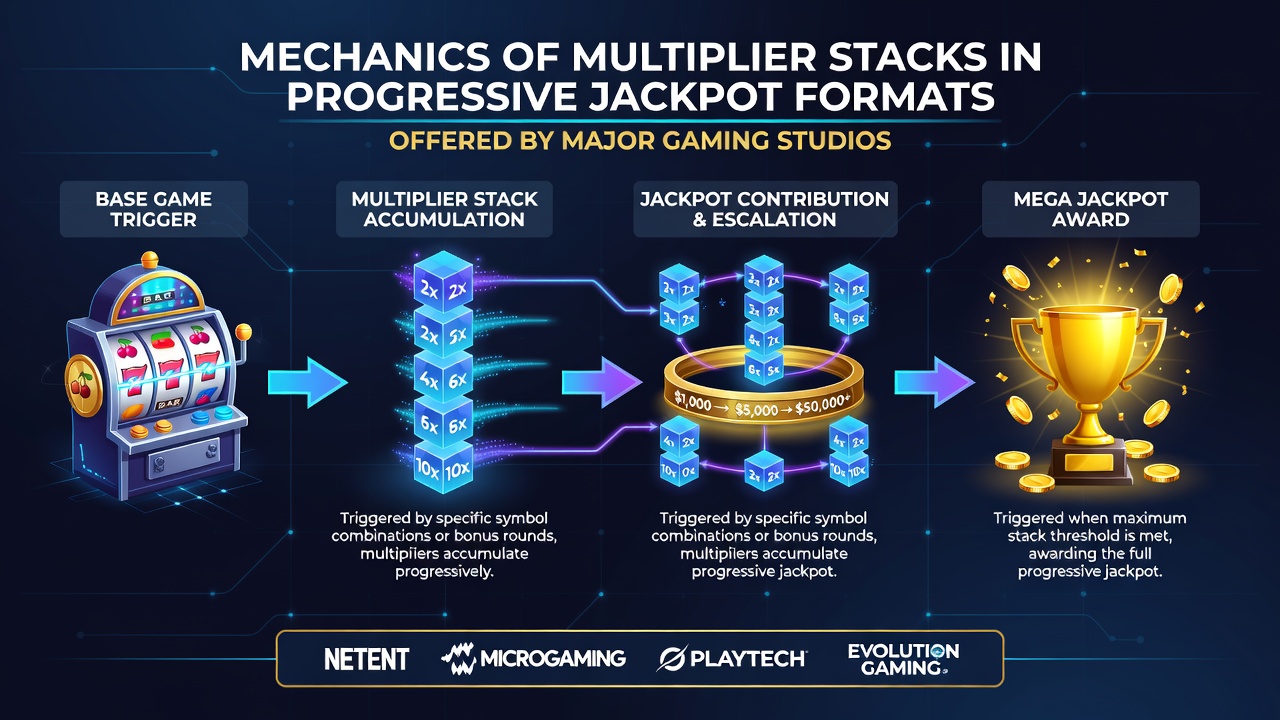
Each bet placed on a connected machine contributes a fixed percentage to the jackpot meter, and observers note that studios track these increments across networked terminals in real time so the displayed total reflects every participating wager. When a multiplier stack activates, the system records individual values in a temporary register that persists through the spin cycle, allowing later triggers to reference the entire chain instead of resetting to a base figure. This approach differs from standard multipliers because the stack order determines the final multiplier applied to the progressive amount, with earlier layers serving as foundations for subsequent additions.
Implementation Across Leading Studios
Playtech titles often embed stackable multipliers within their progressive series by tying them to specific reel positions that light up sequentially, and researchers have documented cases where three stacked layers on a single spin multiply the jackpot seed by factors exceeding 50 times the base contribution rate. In contrast, IGT configurations frequently link multiplier stacks to random bonus events that occur independently of the main reels, which means players encounter the stacking mechanic through separate pick features that feed values back into the progressive total. Those who've analyzed payout logs across these systems find that the stacking window typically lasts between 5 and 15 spins before the register clears, preventing indefinite accumulation while still rewarding extended play sessions.
Technical Triggers and Calculation Flow
Trigger conditions vary by title yet follow consistent patterns where a designated symbol combination initiates the first multiplier entry, after which additional symbols append to the existing stack without overwriting prior entries. The calculation engine then processes the stack from bottom to top, applying each layer in sequence to the current progressive value, and this ordered multiplication produces the final payout displayed to the player. According to technical documentation released by several studios, the system caps individual stack layers at predefined maximums to maintain mathematical balance across the game portfolio, ensuring the progressive pool remains sustainable over thousands of spins.
What's interesting is how these mechanics interact with seed amounts that reset after each jackpot hit, because the next accumulation cycle begins from a guaranteed minimum that already incorporates historical stack frequency data. In June 2026 several studios updated their stacking algorithms to incorporate dynamic seed adjustments based on network-wide play volume, which allows the base jackpot to reflect recent multiplier activity without manual intervention from operators.
Regulatory Context and Reporting Standards
Gaming authorities in multiple jurisdictions require transparent logging of every multiplier layer applied to progressive awards, and figures from the Nevada Gaming Control Board reveal that audits of stacked systems show consistent adherence to certified random number generator outputs. Nevada Gaming Control Board compliance documents specify that each stack entry must carry an auditable timestamp so regulators can verify that multipliers activate only under approved conditions. Similar standards appear in reports from Australian state regulators, where progressive systems undergo periodic testing to confirm that stacked multipliers do not exceed the approved return-to-player percentages for the overall game.
Player Interaction Patterns
Those who've reviewed session data across major platforms observe that multiplier stacks tend to cluster during high-volatility bonus rounds rather than base game spins, which concentrates larger progressive hits into fewer but more significant events. This pattern emerges because studios design bonus entry points to carry higher probabilities of successive stack layers, thereby extending the duration of each progressive cycle before a payout occurs. The result appears in aggregated reports where average jackpot sizes at trigger points have increased steadily as stacking depth expands across new releases.
Future Adjustments in Studio Designs
Developers continue refining stack depth parameters, with some titles now allowing up to five concurrent layers while others maintain tighter limits of three to control variance. Research institutions studying gaming mathematics have published papers showing that deeper stacks correlate with longer average time between jackpot awards, which affects how operators schedule network maintenance and promotional activities around these titles. International Gaming Technology Association summaries indicate that studios balance these deeper stacks against player engagement metrics to sustain participation rates over extended periods.
Conclusion
Multiplier stacks within progressive jackpot formats represent a deliberate layering of values that compounds across spins and features, and major studios maintain distinct implementation styles while adhering to shared technical and regulatory requirements. The mechanics rely on ordered registers, timed clearing windows, and certified calculation engines that together determine final award amounts. Continued updates to these systems in 2026 demonstrate ongoing adaptation to network data and compliance standards across different regions.