12 Jul 2026
Examining RTP Correlations with Bonus Trigger Rates in Games from Leading Developers
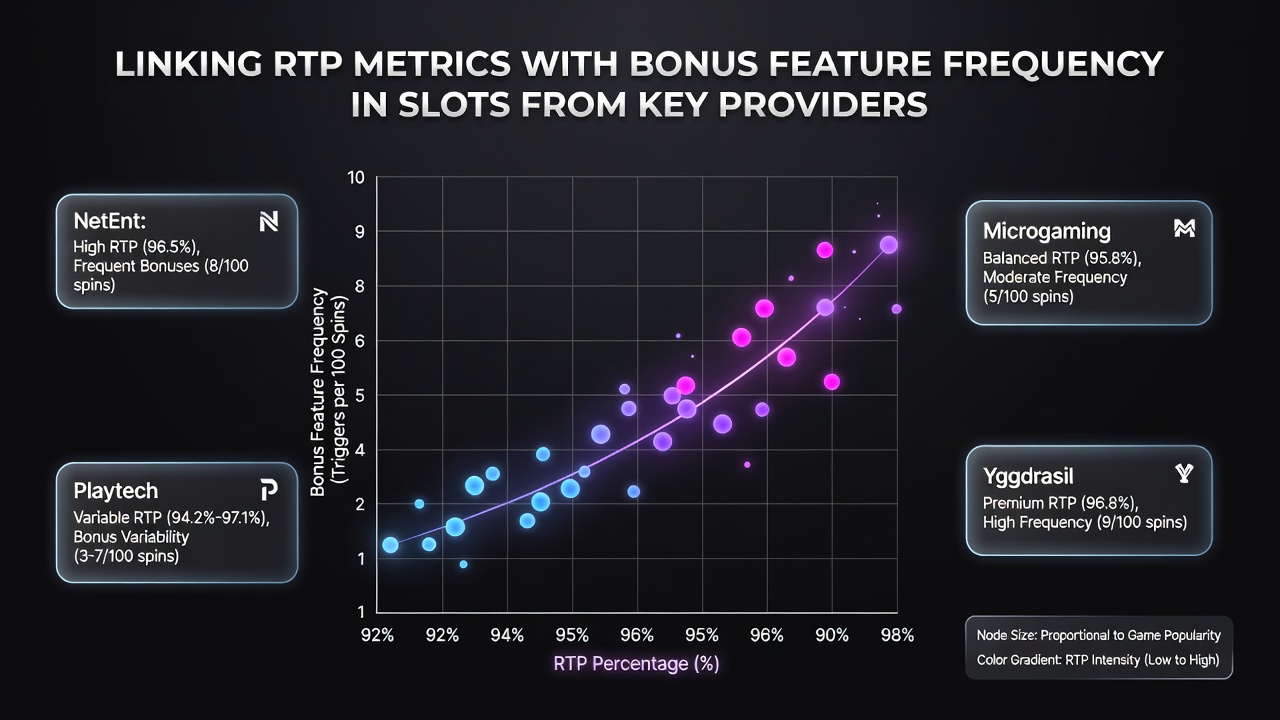
Return to player percentages and bonus activation patterns form measurable relationships that developers track across their portfolios, and analysts examine these connections through aggregated performance data from multiple studios. NetEnt, Play'n GO, and Pragmatic Play publish titles where RTP values range from 94 percent to 98 percent, while bonus round frequencies vary from one trigger every 80 spins to one every 220 spins depending on the volatility model. Researchers at gaming laboratories compile these figures from certified RNG outputs, and patterns emerge when higher RTP configurations pair with adjusted bonus intervals to maintain overall mathematical balance.
Core Components of RTP Calculations
Return to player represents the theoretical percentage of wagered amounts returned to players over extended play sessions, and laboratories verify these values through millions of simulated spins. Data from the Nevada Gaming Control Board shows RTP disclosures for thousands of approved titles each year, and operators receive updated certification reports that list both base game returns and feature contributions. When bonus mechanics account for 30 to 50 percent of total RTP in many modern releases, the frequency of those features directly influences how quickly players reach the advertised return threshold.
Bonus Feature Types and Their Activation Patterns
Free spin rounds, pick-and-click sequences, and progressive jackpot qualifiers each carry distinct trigger probabilities that developers calibrate during design. Observers note that expanding wild mechanics often appear in titles with RTP values above 96 percent, and these same games frequently schedule bonus entries at intervals of 110 to 160 spins. Play'n GO's certified games illustrate this distribution, where titles with 97.5 percent RTP activate main bonuses every 135 spins on average according to independent testing records. Meanwhile, lower RTP configurations in the same provider's library shift bonus frequency toward 190 spins to preserve the overall payout curve.
Provider-Specific Data Trends
Pragmatic Play releases demonstrate consistent RTP-to-frequency linkages across their 2025 and 2026 catalogs, with high-volatility entries pairing 95.8 percent RTP with bonus triggers near the 200-spin mark. Lower-volatility counterparts from the same studio adjust to 97.2 percent RTP while shortening intervals to approximately 95 spins. Those who've studied these matrices observe that the adjustments keep expected value stable even as player experience changes. European Gaming Association reports from early 2026 confirm similar calibration practices among multiple member studios, where RTP increments of 0.5 percent correlate with measurable reductions in average spins between features.
Regulatory Updates and Reporting in July 2026
July 2026 brought revised certification standards from several oversight bodies that require more granular disclosure of feature contribution percentages within overall RTP figures. Canadian regulatory summaries released that month list average bonus frequencies alongside RTP for newly approved titles, and the data shows a tightening range where 96.5 percent RTP games cluster around 140-spin bonus intervals. Australian research institutions tracking licensed products reported parallel findings, noting that developers now publish expected trigger rates during the approval process rather than after market release. These reporting shifts allow operators and analysts to map RTP and frequency relationships with greater precision across jurisdictions.
Analytical Methods Used by Testing Labs
Independent laboratories apply Monte Carlo simulations and cycle-based modeling to verify both RTP and feature frequency claims before certification. Results indicate that titles from major providers maintain advertised bonus intervals within a 5 percent variance band after 10 million simulated spins, and deviations beyond that threshold trigger design adjustments. Researchers cross-reference these simulation outputs with anonymized operator data feeds to confirm real-world alignment, and the combined datasets reveal stable correlations between RTP tiers and activation timing. One documented case involved a 2025 release that moved from 96.1 percent RTP with 175-spin bonus spacing to 96.6 percent RTP with 142-spin spacing after lab feedback refined the math model.
Conclusion
Linkages between RTP metrics and bonus feature frequency appear consistently across portfolios from established providers, and regulatory reporting enhancements in 2026 continue to make those relationships more transparent. Laboratories and industry associations supply the underlying datasets that support these observations, while certification requirements ensure the published figures reflect verified performance. Players and operators gain clearer expectations when both RTP and activation rates receive equal documentation in approval records.