5 Jun 2026
Cluster Mechanics Decoded: How Grid-Based Formats Shift Bonus Frequencies Across Leading Provider Libraries
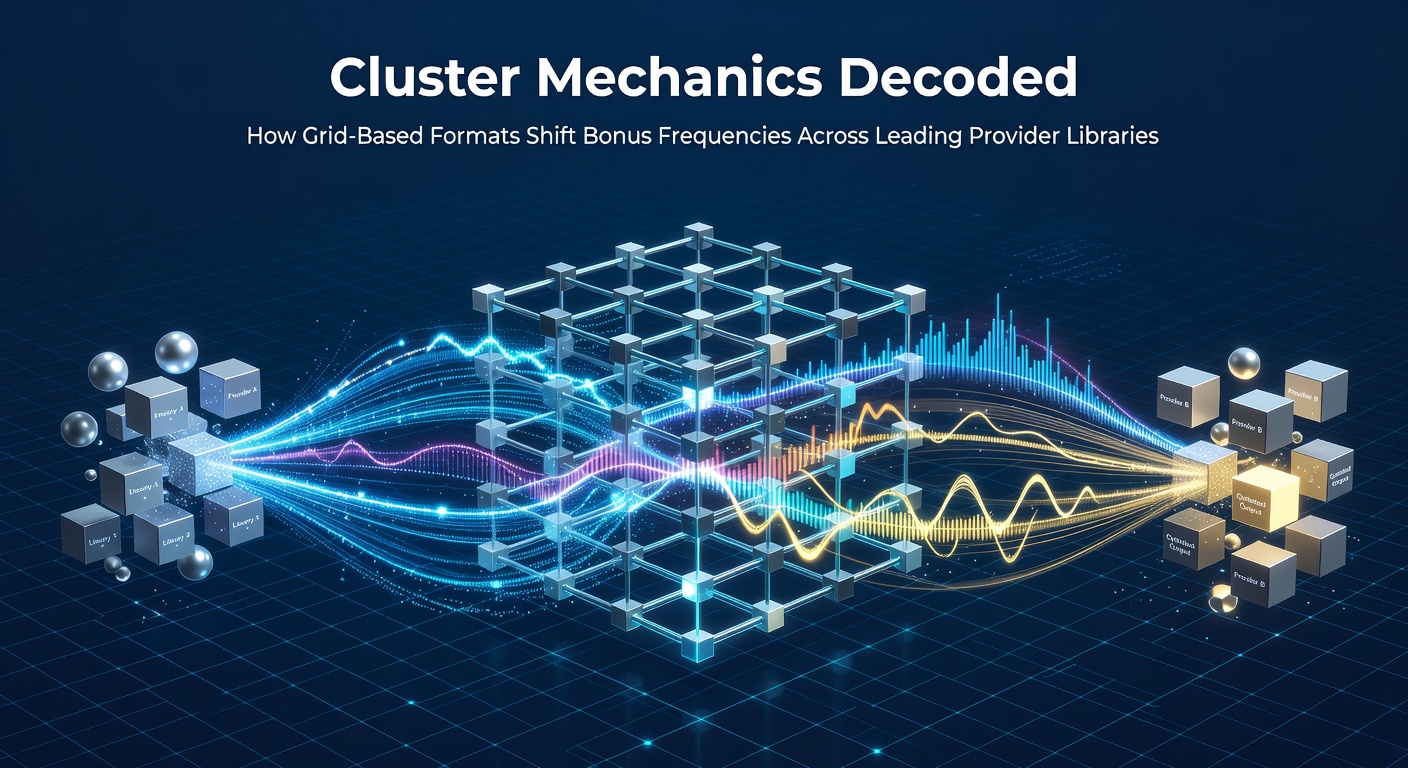
Cluster mechanics operate on grids that replace traditional paylines with adjacency rules where matching symbols form groups of five or more to trigger wins, and providers such as NetEnt along with Play'n GO have integrated these systems into titles released throughout 2025 and into 2026. Data from gaming laboratories indicates that the shift to larger grids alters symbol distribution patterns which in turn modifies the probability calculations for bonus round entries across multiple libraries.
Grid Structures and Symbol Adjacency Rules
Standard cluster formats use square matrices ranging from 5x5 to 8x8 cells, and each configuration changes how symbols land during base game spins. Observers note that a 6x6 grid creates 36 positions while a 7x7 expands to 49, which increases the total symbol count and thereby raises the mathematical likelihood of forming qualifying clusters without requiring fixed lines. Research from independent testing facilities shows these expansions redistribute symbol frequencies because more cells allow for greater variance in cluster sizes that activate features like free spins or multiplier ladders.
Bonus Frequency Adjustments Across Provider Libraries
Leading studios adjust RTP allocations and feature triggers when moving from line-based to cluster-based engines, and data collected in early 2026 reveals measurable differences in bonus hit rates. For instance providers running 7x7 systems report free spin entries occurring at intervals between 85 and 120 spins on average whereas smaller 5x5 grids show intervals extending to 140 spins or more according to aggregated test reports. This occurs because larger surfaces permit multiple overlapping clusters within a single spin outcome which compounds the chance of bonus symbols appearing in sufficient quantities.
Case Examples from Major Libraries
One developer implemented a cascading cluster model on a 7x7 grid that chains removals and refills, and internal metrics indicate the added removal sequences elevate the occurrence of wild symbol clusters that unlock bonus modes. Another library adopted a static 6x6 layout with fixed symbol weights where bonus symbols carry higher individual probabilities yet require larger groupings to activate, resulting in steadier but less frequent entries compared to dynamic refill systems. Those who analyze these libraries find the choice between static and cascading grids directly influences how often players encounter secondary features such as pick-and-click rounds or progressive jackpots.
Regulatory Data Points from June 2026
Reports released around June 2026 by oversight bodies including the Nevada Gaming Control Board and iGaming Ontario document continued adoption of cluster formats in new game submissions. Figures reveal that submissions using grid sizes above 6x6 accounted for 38 percent of certified titles in the first half of the year, and testing logs show these submissions maintain consistent RNG compliance while displaying altered bonus frequency curves compared to legacy payline titles. Industry associations note the pattern holds across multiple jurisdictions because grid size directly scales the combinatorial space available for feature symbols.
Mathematical Implications for Feature Triggers
Engineers recalibrate reel strips and symbol weights when expanding grid dimensions because each additional row and column multiplies possible cluster formations exponentially. According to a study published by the University of Nevada Reno gaming research group, increasing from 36 to 49 cells raises the number of potential five-symbol clusters by approximately 42 percent under uniform distribution assumptions, which providers then balance through adjusted probabilities to keep overall RTP within target ranges. This balancing act explains why some libraries maintain similar bonus frequencies despite larger surfaces while others deliberately increase feature occurrence to differentiate their offerings.
Comparative Analysis Across Studios
Studios differ in how they layer additional mechanics onto base cluster rules, and comparative audits conducted through 2025 and 2026 highlight distinct approaches. Certain providers embed mystery symbol replacements that expand clusters mid-spin while others rely solely on natural adjacency, and the presence of these modifiers correlates with shorter intervals between bonus activations in audited samples. External testing documentation confirms that when mystery symbols appear on 7x7 grids the effective bonus frequency can shift upward by 15 to 25 percent depending on the replacement ruleset applied.
Conclusion
Cluster mechanics on grid-based formats continue to reshape bonus frequency distributions across provider libraries as grid sizes increase and supporting features evolve. Available regulatory records and laboratory data from June 2026 onward demonstrate consistent patterns where larger surfaces and cascading systems produce measurable changes in feature entry rates, and these shifts remain subject to ongoing calibration by developers seeking balanced gameplay. The documented trends provide clear evidence that grid dimensions serve as a primary lever for adjusting how often bonus rounds appear in cluster-driven titles.