Bonus Purchases in Video Slots: How They Shift Expected Value Dynamics
Nils Vogel · Aug 9, 2026
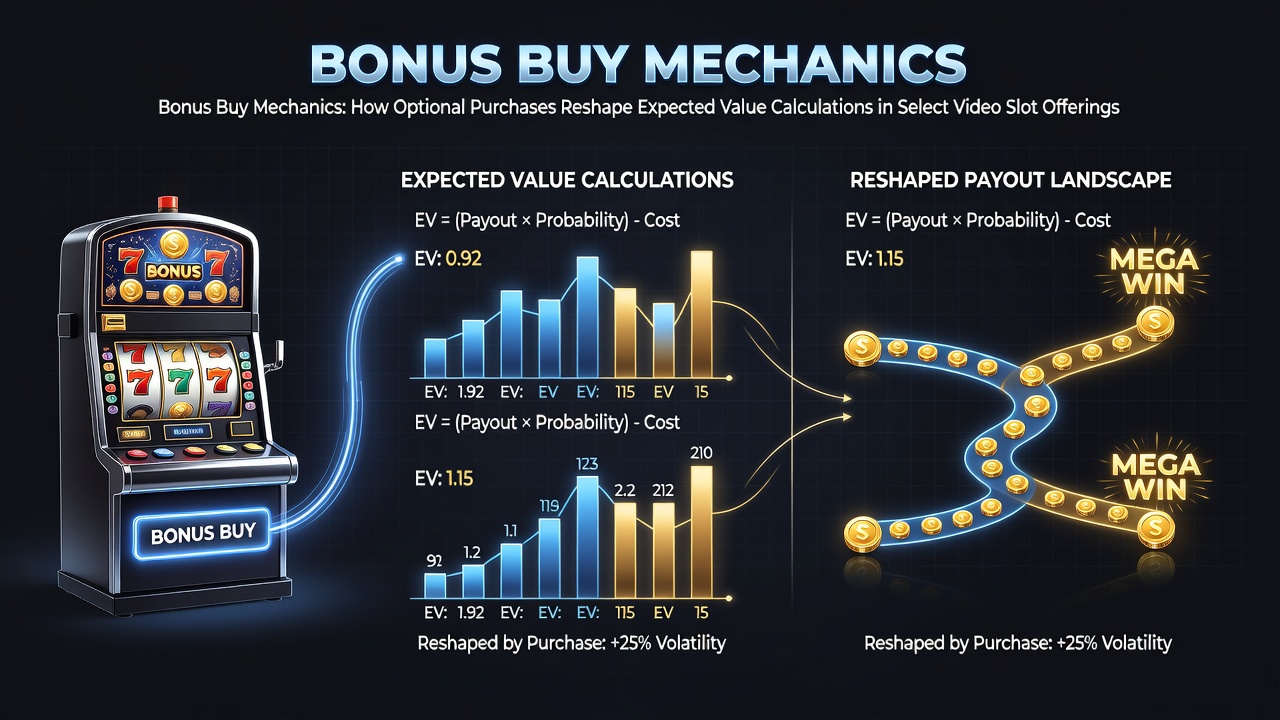
Bonus Purchases in Video Slots: How They Shift Expected Value Dynamics
Bonus buy mechanics allow players in select video slot titles to pay a fixed multiple of their base bet for immediate entry into feature rounds, bypassing standard trigger probabilities that rely on random symbol alignments. Data from multiple game providers shows these options typically cost between 50x and 200x the stake, depending on the title and the volatility profile of the underlying bonus structure. Observers note that this direct purchase path recalculates expected value because the feature becomes a guaranteed outcome rather than a probabilistic event weighted by its natural hit frequency.
Expected value in standard play combines the return-to-player percentage across base game spins and randomly triggered bonuses. When a bonus buy activates, the calculation isolates the bonus round's internal RTP, subtracts the purchase cost, and compares the net result against continued base game spins. Research indicates the effective RTP during a bought bonus often exceeds the overall game RTP because the purchase price factors in the full distribution of possible outcomes, including high-variance jackpots or multiplier sequences.
Mechanics Behind the Purchase Option
Developers implement bonus buy through a menu selection that appears after any spin or during idle states, with the price displayed as a static multiplier. Once selected, the game deducts the amount instantly and transitions straight into the feature, whether that involves free spins, respins, or pick-and-click sequences. Figures from studio documentation reveal that some titles adjust the buy price dynamically based on current bet level while others fix it as a constant ratio. This structure means the expected value shift occurs at the moment of purchase, independent of prior base game results.
Recalculating Expected Value
Standard expected value multiplies each possible payout by its probability and sums the results. Bonus buy removes the probability variable for the feature trigger, replacing it with a certainty cost. Analysts have observed that the new EV equals the bonus round's average return minus the buy price, divided by the stake. When the bonus average return surpasses the buy cost by a margin that exceeds the base game contribution, the optional purchase raises overall session EV compared with waiting for natural triggers. Studies from academic gaming research groups confirm this adjustment holds only within the specific parameters of each title's math model.
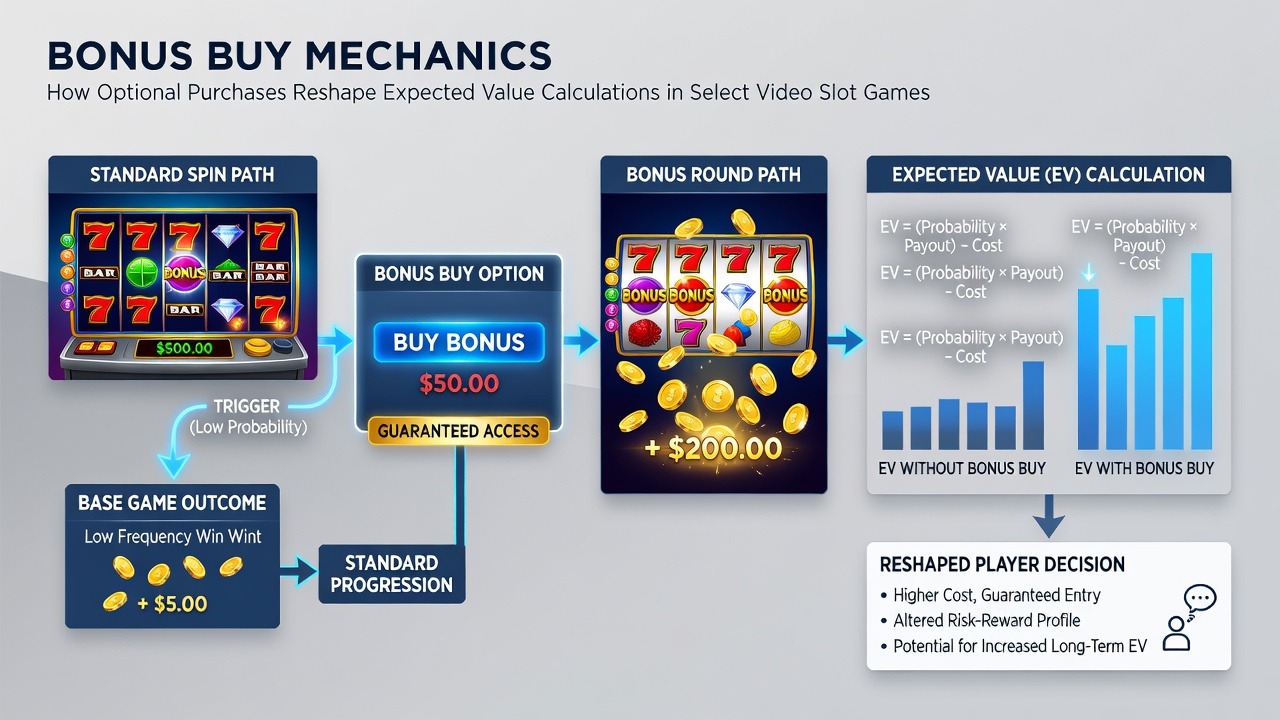
Take one title where the base RTP sits at 96.1 percent and the bonus contributes 40 percent of total return through a 1-in-150 trigger rate. Purchasing the bonus for 100x the stake compresses that contribution into a single transaction whose internal return must exceed 100x to deliver positive EV relative to the cost. Data shows certain releases post bonus-internal RTP values near 97 percent or higher, which produces a measurable lift once the purchase price is accounted for in the equation.
Regional Regulatory Perspectives
Authorities in different jurisdictions review these mechanics under varying disclosure rules. The New Jersey Division of Gaming Enforcement requires clear display of purchase costs and resulting RTP segments so players see the isolated figures. Similar requirements appear in reports from the Malta Gaming Authority, which track how optional features alter session-level return distributions. These disclosures help maintain transparency around the EV changes introduced by bonus buys.
Provider Implementation Patterns
Leading studios release titles with buy options that scale across volatility levels, from low-variance frequent small features to high-variance infrequent large ones. One documented case involves a cluster-pays game where the buy price sits at 75x and unlocks a sequence of expanding multipliers. Calculations published in industry white papers show the EV advantage materializes only when the player commits to multiple purchases within a bankroll sized to absorb variance. August 2026 saw additional titles from European studios adopt tiered buy options that let players select different intensity levels within the same feature, each carrying its own price and internal return profile.
Another example comes from a Megaways title where the bonus buy for 100x delivers an average of 112x return across thousands of simulated rounds. Researchers at university-affiliated gaming labs have published simulations confirming the net positive shift occurs because the purchase price embeds the full outcome distribution, including rare maximum multiplier results that standard triggers rarely reach within short sessions.
Conclusion
Bonus buy mechanics alter expected value calculations by converting probabilistic feature entry into a fixed-cost transaction whose return depends solely on the bonus round's internal mathematics. Evidence from regulatory disclosures and provider data sets demonstrates that the shift produces measurable differences in session EV when the purchased feature's average return exceeds the buy price relative to base game contributions. Players encounter these options in a growing number of releases, each with its own cost-to-return profile that requires separate evaluation against the overall game model.